How it works
Energy and compute, designed as one infrastructure system.
Vision & mission
Why we're building this.
Our vision
Australia owns its intelligence infrastructure.
Australia’s next major electricity load is already arriving. Compute demand is growing faster than the generation, storage and network capacity required to support it. We believe energy and compute infrastructure should be developed together, built in Australia and owned here, rather than waiting for the public grid to absorb an unprecedented new load.
AEMO is tracking 11 large data-centre projects representing 5.4GW of maximum demand in the transmission connection process.Australia’s next major electricity load is already arriving. Compute demand is growing faster than the generation, storage and network capacity required to support it. We believe energy and compute infrastructure should be developed together, built in Australia and owned here, rather than waiting for the public grid to absorb an unprecedented new load.
AEMO is tracking 11 large data-centre projects representing 5.4GW of maximum demand in the transmission connection process.Scale of the problem

Data centres could add more demand than electrifying Australia’s cars and homes.
The new electricity load is arriving faster than generation, storage and transmission can be built.
Report warns AI data centre boom threatens Australia’s energy transition
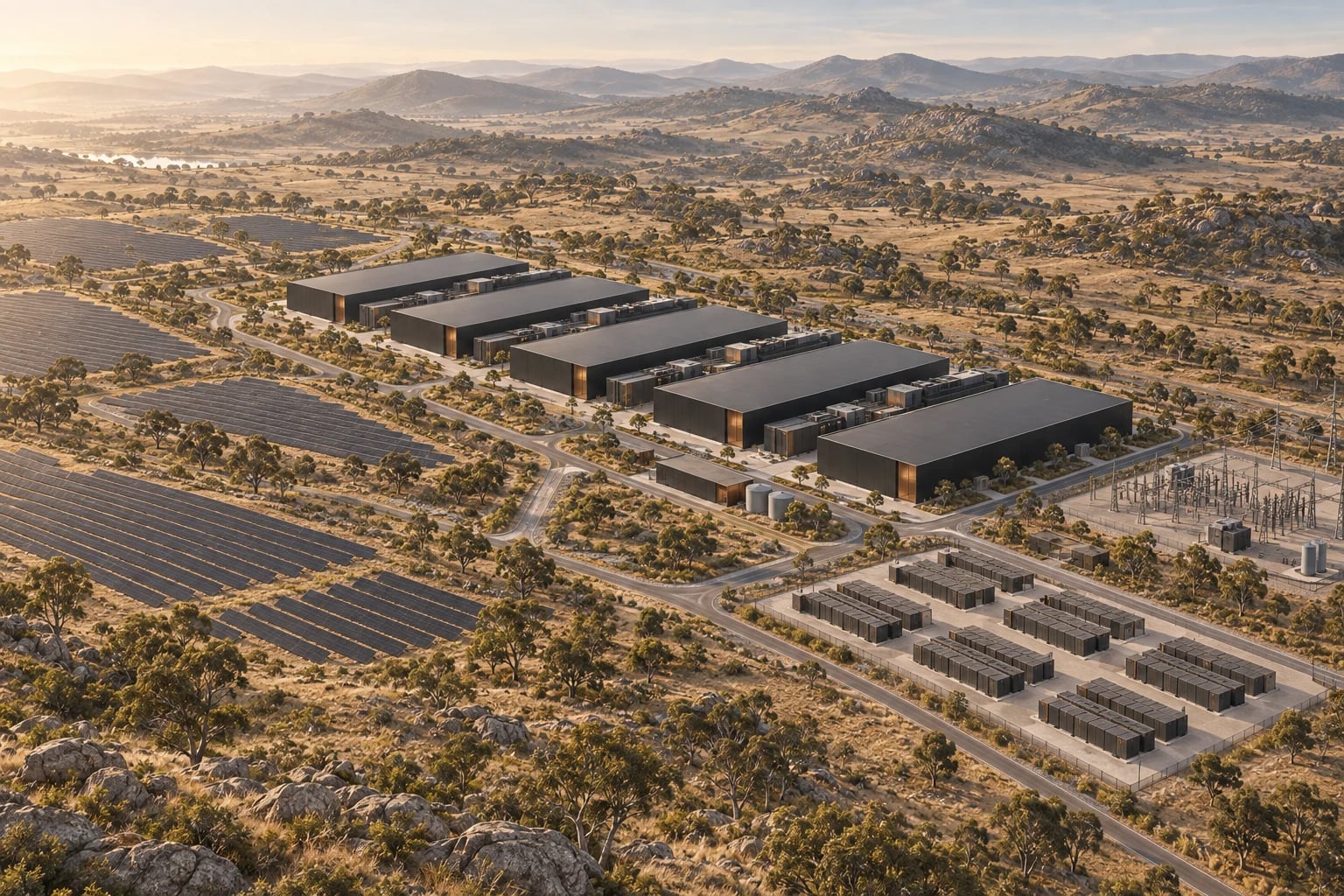
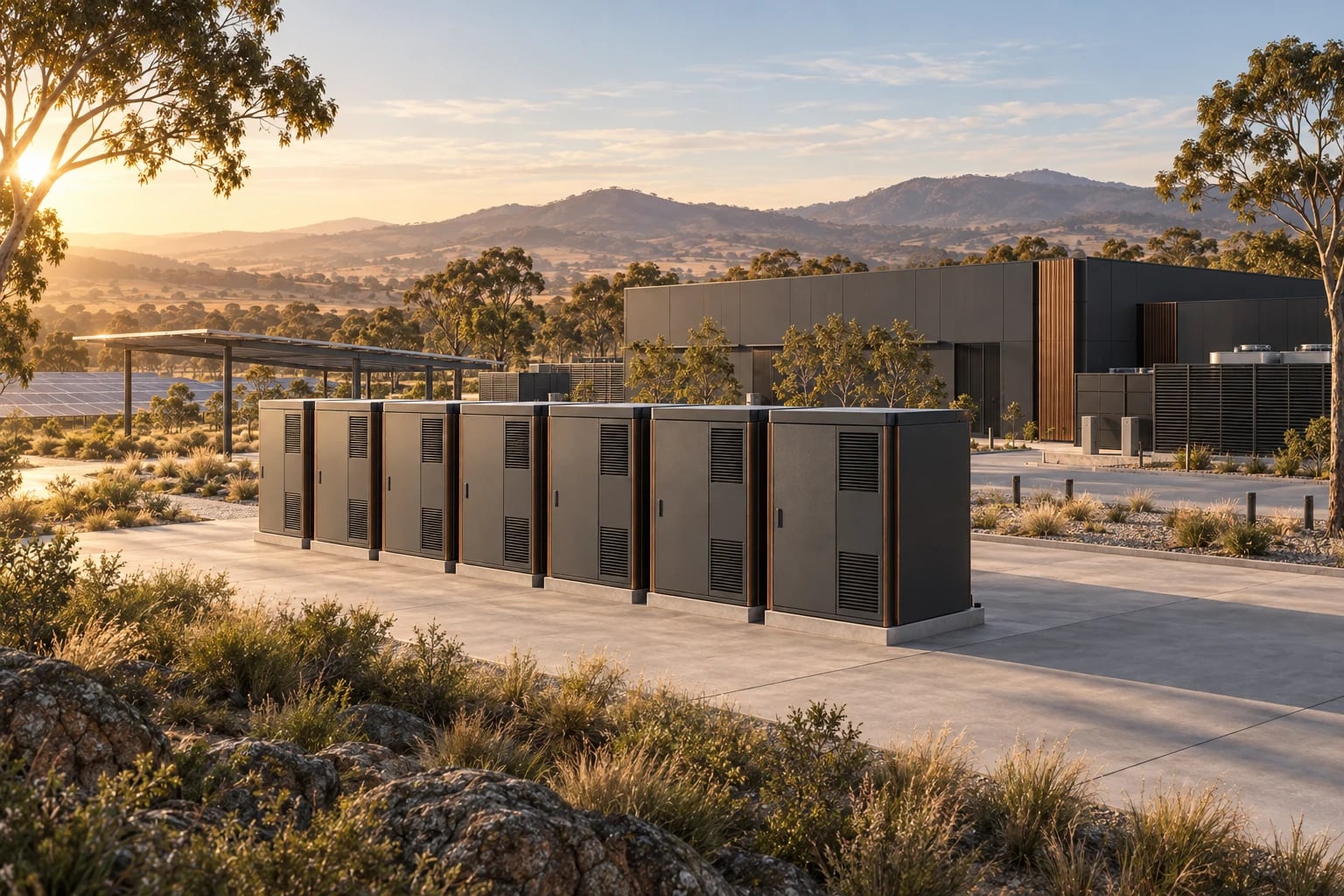
Read source →Allkira develops the energy system around the workload: solar generation, distributed battery storage, DC power, dry cooling, fibre and controls engineered as one campus. The goal is firm compute capacity without relying on a new grid connection, combustion backup or mains water, using repeatable building blocks configured for each tenant and site.
Infrastructure response

The emerging guardrail: new compute must bring new power.
South Australia is developing rules intended to manage data-centre energy, water and consumer impacts.
SA government moves to regulate AI data centres as water, energy concerns mount
Read source →The hardest constraints are not footnotes. Power quality, backup, noise, cooling, water, planning, land and social licence determine whether infrastructure can proceed. We expose assumptions, distinguish established evidence from modelled and open items, and stop rather than advance when the technical, development or commercial case cannot be supported.
Project consequence

120MW withdrawn at the planning gate.
Backup, siting and social-licence constraints stopped the project before construction.
Developer withdraws plans for Perth datacentre after fierce community opposition
Read source →Our process
One process. One digital thread.
From workload brief to operating campus, Allkira uses an AI-assisted development system to compare options, maintain evidence and keep every assumption traceable. Engineers, suppliers and tenants validate the decisions that move a project forward.
AI accelerates the analysis. People validate every decision.
AI-assisted work
Structures tenant requirements and identifies missing, contradictory or unresolved inputs.
Human validation
The tenant confirms the workload, resilience, timing and commercial requirements.
Digital record
- Requirements
- Assumptions
- Open inputs
AI-assisted work
Generates campus scenarios, compares regions, matches cost sources and assembles a ranked screening pack.
Human validation
Engineers test the assumptions and identify what requires site, supplier or planning confirmation.
Digital record
- Evidence
- Cost sources
- Model versions
AI-assisted work
Assembles the decision pack and surfaces unresolved assumptions, trade-offs and confidence levels.
Human validation
The tenant decides whether the project should pause, be refined or advance into site-specific development.
Digital record
- Open items
- Decision record
- Approval basis
AI-assisted work
Tracks model changes, supplier inputs, cost movement and the consequences of design decisions.
Human validation
Engineers, planners and suppliers validate design, performance, approvals and pricing.
Digital record
- Design decisions
- Supplier evidence
- Change history
AI-assisted work
Maintains a traceable commissioning, handover and operational record where contracted.
Human validation
Commissioning teams accept the completed system and operators remain responsible for ongoing decisions.
Digital record
- Commissioning
- Handover record
- Operational evidence
Missing information remains open. It is never treated as zero or certainty.
- Define the requirement
Start with the workload.
Define IT capacity and phasing, load shape, rack density, cooling, availability, flexibility, fibre, deployment timing and expansion.
Assign funding, ownership, operation and maintenance by asset class. These inputs form the versioned design basis.
Output Confirmed workload, service and commercial basis.
- Shape the campus
Configure the initial system.
Generate screening configurations for generation, storage, power distribution, cooling, fibre, data halls and indicative land requirements.
Compare reliability, capex, operating cost, footprint, staging and expansion. Standardised blocks provide the base; workload and commercial requirements determine the configuration.
Power stays DC from generation to chip, cutting conversion stages, waste heat and fragmented control.
System role
03DC Power Spine
Power stays DC from generation to chip, cutting conversion stages, waste heat and fragmented control.
Output Integrated campus concept and capacity plan.
- Screen the regions
Rank candidate regions.
The Screening Agent compares regions using available evidence for solar and weather resource, land, fibre, planning pathways, environmental constraints, hazards, logistics and expansion.
It returns a ranked shortlist with its assumptions, constraints and open items. This is regional screening, not site selection.
Output Ranked regional shortlist and screening rationale.
- Estimate capital requirements
Build the indicative cost basis.
The Capex Agent maps the campus configuration to equipment, manufacturing, construction and development cost codes.
It selects applicable benchmarks and historical quotes by capacity, location, facility type, cooling, commercial boundary, scope, price date and expiry. Missing costs remain open.
Historical quotes are evidence, not current supplier offers. The result is an indicative range, not a bankable estimate.
Output Indicative capital-cost range, allocation and source basis.
- Return the decision pack
Give the tenant the first complete view.
With complete inputs, Allkira targets a consolidated screening pack in approximately two weeks. The pack contains:
- Confirmed design basis
- Initial campus configuration
- Ranked regional shortlist
- Initial energy and land requirements
- Indicative capex and capital allocation
- Staging and expansion basis
- Open items and next studies
Output Screening pack ready for tenant review.
Decision gate
Confirm the direction before project development begins.
The tenant can pause, refine or advance the concept.
Site-specific project development begins only after confirmation.
- Develop the project
Close the site-specific case.
Complete the required work across land and planning, environmental constraints, geotechnical conditions, drainage and hazards, fibre, resource and reliability modelling, electrical stability and protection, controls, cooling, fire, safety, equipment and pricing.
Produce the basis of design, technical specifications, interface requirements, acceptance criteria and work packages. The system tracks evidence, dependencies and changes; engineers remain responsible for validation.
Output Site-specific design package supporting approval, procurement and investment decisions.
- Procure and build
Coordinate one delivery system.
Allkira coordinates its manufacturing and delivery partners with the tenant's nominated compute, data-hall and equipment providers.
Controlled specifications and interfaces connect generation, storage, power, cooling, controls, fibre and compute. Supplier status, design revisions, cost effects and schedule effects remain tied to the current design basis.
The campus is delivered in staged, repeatable blocks.
Output Installed infrastructure ready for integrated commissioning.
- Commission the campus
Prove it as one system.
Equipment packages complete the required factory and site acceptance tests before integrated campus commissioning.
System testing covers load response, generation and storage transitions, protection and controls, thermal performance, communications resilience and failure recovery. Acceptance is measured against the contracted requirements.
Output Commissioned campus with demonstrated system performance.
- Operate or transfer
Match the operating model to the contract.
Own and operate
Allkira retains the agreed infrastructure and operates it under a long-term contract.
Operate and transfer
Allkira operates through an agreed commissioning or stabilisation period before transferring the contracted assets, systems and operating records.
The contract defines the asset and operating boundary. Under either model, telemetry supports monitoring, maintenance and capacity planning.
Output Operating campus with defined ownership, operating and expansion responsibilities.
The Allkira method
Repeatable does not mean identical.
Every campus follows the same development method, but its configuration is specific to the workload, site and commercial boundary.
- 01
The workload defines the service.
- 02
The site shapes the infrastructure.
- 03
Evidence determines what can be committed.
What scales is the method, not one fixed campus design.
Contact
Bring us a compute requirement.
We will provide an initial view of where it may fit, what it may require and what must be validated next.